Construction has long offered people the opportunity to build human critical infrastructure, and a new generation — including an increased number of women — are helping carry that work forward.
Construction careers offer opportunities to solve complex problems, form lasting bonds and have a tangible impact with infrastructure projects. For four female Black & Veatch employee-owners, their stories demonstrate an important lesson for younger generations: You don't need your entire career mapped out before taking the first bold step.
An unexpected place in the field
Mary Korte joined Black & Veatch more than a decade ago in telecommunications engineering, supporting the installation of fiber infrastructure in cities. She later transitioned into the company’s power business and roles ranging from construction coordinator to construction manager and site manager on solar projects. Now, she’s supporting projects in their infancy, helping teams create schedules and incorporate field perspectives before construction begins.
With a civil engineering degree, she originally didn’t envision this being her career path. But over time, one of her career’s defining features was her willingness to chase new opportunities. Her work in construction combines technical elements with the need to adapt quickly, communicate effectively and respond to changing conditions.
While some aspects of solar construction can be repetitive, no two days are exactly the same. When something doesn't go as planned, you have to adapt, find a solution and keep the work moving forward. Those unexpected challenges are what make the job exciting and fulfilling.”
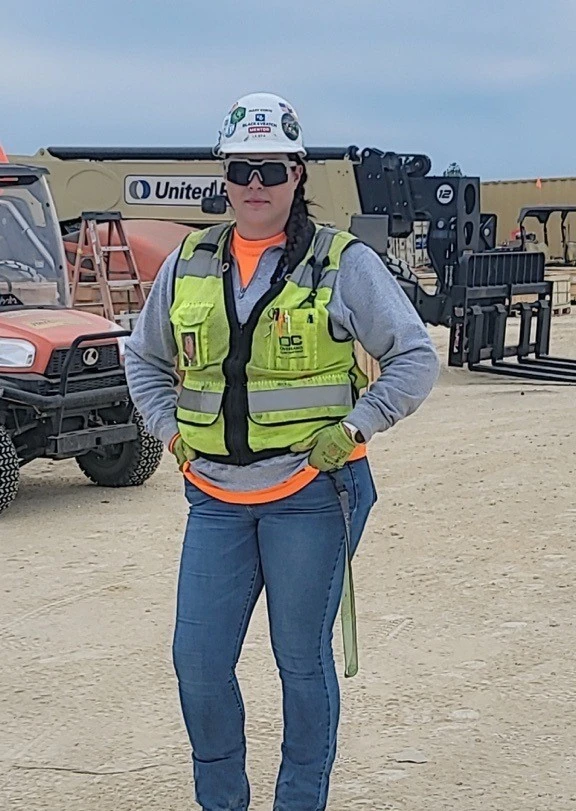
Pictured: Black & Veatch professional Mary Korte
Audrey Eiswirth also migrated to the construction field through an unexpected opening. She joined Black & Veatch in January 2021, initially working virtually before seizing the opportunity to support a Florida solar project as a project controls associate. What followed were field experiences supporting solar, wind and other power generation projects.
Like Korte, Eiswirth hadn’t pictured herself working on construction sites after college.
Trying out working in the field was life changing for me, and I would encourage everyone to try it out for themselves. They may discover a career they never knew they would have.”
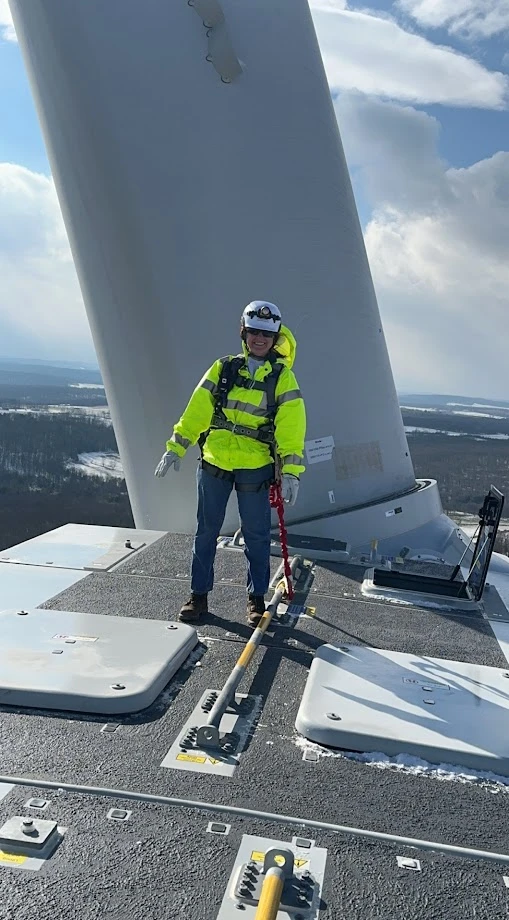
Pictured: Black & Veatch professional Audrey Eiswirth
To Eiswirth, even a temporary field assignment can offer insight into how projects are built, how teams collaborate and how decisions made in an office affect work onsite. Such onsite knowledge can remain valuable whether a professional stays in construction or later pivots to consulting, engineering or another part of the industry.
Building careers through experience
Helen Wehner began at Black & Veatch in 2018 as a civil and structural engineer in the oil and gas business, then joined a rotational program that allows professionals to try different roles. She later accepted a field assignment at a nuclear power plant in Washington state and worked in the water business before moving into field project controls, where she worked on three different solar projects.
In her work in the field, she found an alluring mix of new challenges and opportunities that honed her adaptability while gelling her analytical background with the pace and variety of field work. Rather than viewing her first role as permanent, Wehner encourages industry newcomers to experiment until they identify what meshes with their strengths.
I think willingness to try new things is essential,” she said. “If you’re on a project and it’s not your thing, try out another project. You may find your niche in construction and end up in a role that really suits your strengths.”

Pictured: Black & Veatch professional Helen Wehner
That’s especially relevant for students and early-career professionals who may feel pressure to pick a single path.
Recognizing multiple paths to success
After joining Black & Veatch in 2016 with a mechanical engineering degree and taking on an engineering role, Elizabeth Havelka moved into project controls and later supported major power generation projects. She’s now a project controls manager while maintaining regular interaction with field teams.
“Not every career path begins with a college degree,” she said. “Going into the trades is a career that allows you to grow, be part of critical work and expand your expertise.”
Havelka noted that trade careers weren't strongly promoted in the community where she grew up, particularly with women; she understood the benefits after working in the field for a short time. On one project, she saw an electrical subcontractor with more women craft professionals than she had previously encountered, with their work highlighting the technical precision and attention to detail that skilled electrical work requires.
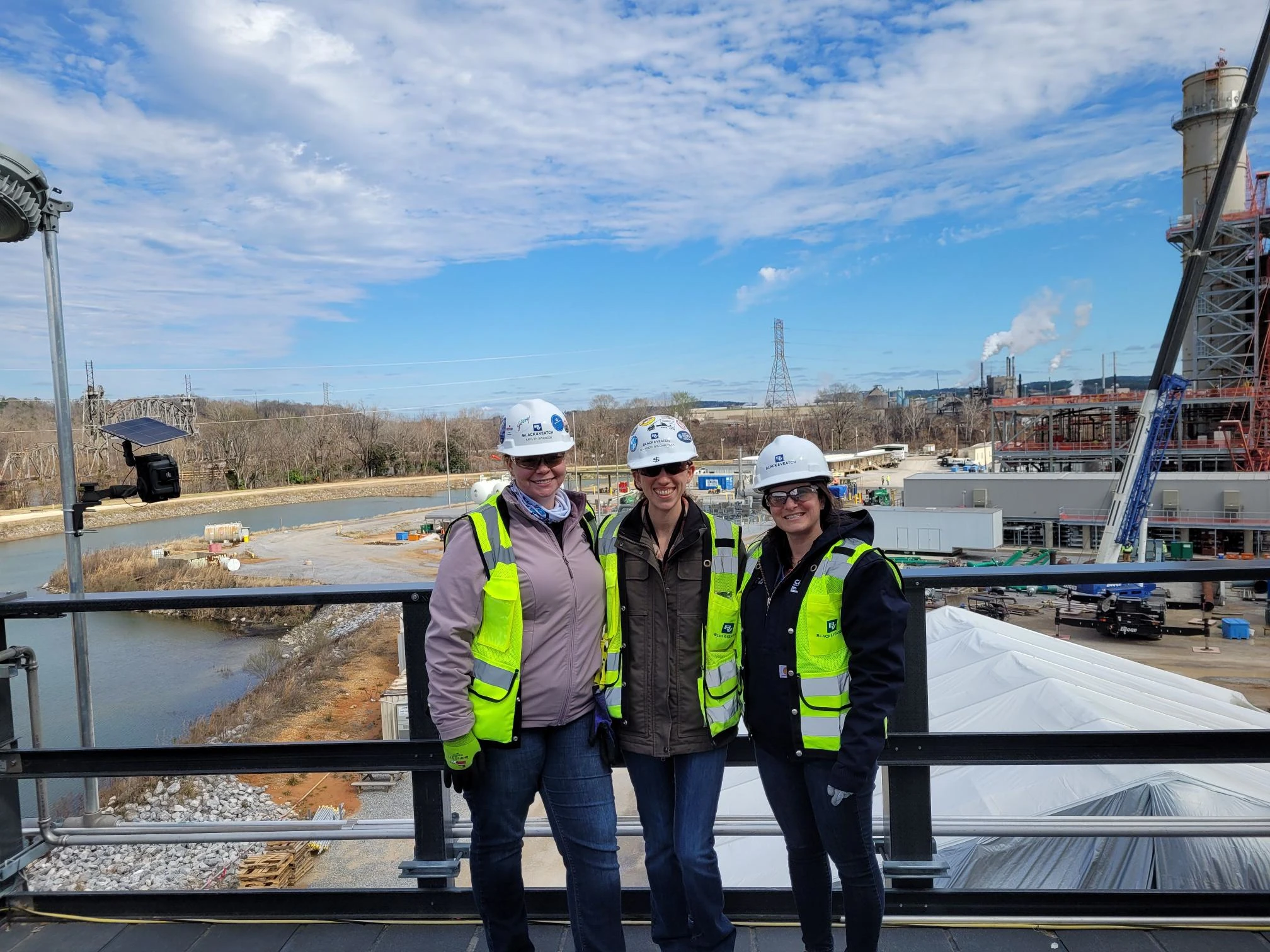
Black & Veatch professionals, Laura Belozer, Liz Havelka and Kaitlyn Swanson
Her bottom line: “Visiting a job site can transform knowledge into a practical understanding of how equipment, materials and processes come together. Some of the strongest project leaders I know did not follow a traditional engineering path. Instead, their expertise developed through hands-on assignments and progressively broader responsibilities.”
Building infrastructure and community
Construction can be demanding. Field assignments can mean long days, time away from home and rapidly changing priorities, but it can also involve camaraderie, growth and sense of accomplishment that foster an enriched experience.
Wehner described field teams as close-knit, working together through setbacks while celebrating project milestones, creating bonds that shape the entire project experience. To Korte, people on the job are constant motivation through their stories and experience.
“For me, the motivation in this work comes back to a purpose” in building a legacy of power, water and other critical infrastructure across the country, Havelka said.
The promise of tomorrow’s infrastructure will be shaped by people eager to learn, adapt and step into unfamiliar places and spaces. While the first step may be an apprenticeship or an entry-level position, the journey doesn’t have to follow a straight line. As these four women and their careers demonstrate, the willingness simply to try can open the door to challenging and unexpectedly rewarding work.
And the ability to point at a power or water plant and forever boast to family or friends, “I built that.”
Contact us
Looking for a partner in innovation?
Let's talk